
How to Keep Plant Protein Beverages From Settling (Clean Label Formulation Guide)
Plant protein beverages are one of the fastest-growing formats in functional nutrition. But they also come with one of the most common (and frustrating) technical challenges in beverage development: sedimentation.
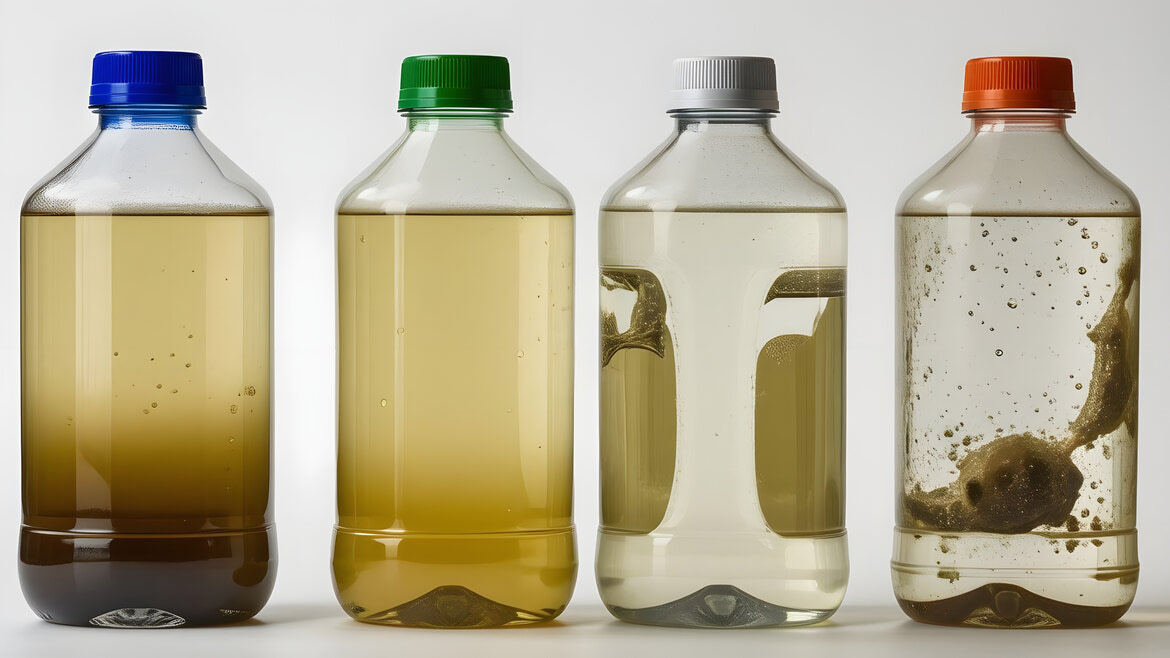
If you’ve ever developed a pea, fava, rice, or blended plant protein beverage and seen a layer form at the bottom of the bottle, you already know the issue.
Sedimentation can show up as:
- Visible settling
- A gritty mouthfeel
- Phase separation
- A “shake hard” requirement that consumers don’t love
- A product that looks unstable even if it’s technically safe
This is especially true in ready-to-drink beverages (often called RTDs), where consumers expect a smooth, stable product that stays consistent from day one through the end of shelf life. RTDs are more stability-sensitive than powders because there’s no shaking or blending step before consumption.
In this troubleshooting guide, we’ll break down why plant protein settling happens, and how formulators can create a plant protein settling solution using clean label RTD formulation strategies.

Why Do Plant Protein Beverages Settle?
Plant protein beverage sedimentation is usually caused by a combination of physical instability and ingredient interactions.
Here are the most common technical drivers:
1. Particle Size and Insoluble Protein Fractions
Most plant proteins contain a percentage of insoluble material. Even in well-processed isolates, there can be:
- Protein aggregates
- Fiber residues
- Starch remnants
- Naturally occurring insoluble fractions
Gravity wins if the particle size is too large or if particles clump together during processing.
2. Protein Aggregation (Heat + Minerals + pH)
Many protein drinks are processed with:
- UHT or retort
- Hot-fill
- High shear
- Homogenization
- Mineral fortification (calcium, magnesium, etc.)
These steps can trigger aggregation, especially when pH and mineral salts push proteins closer to their isoelectric point or reduce electrostatic repulsion.
3. Low Viscosity
A low-viscosity beverage such as a protein water is more likely to settle.
In other words: The cleaner and thinner the beverage, the more likely it is to sediment.
This is one of the biggest formulation tensions in the market right now.
4. Density Mismatch Between Protein and the Liquid Phase
Plant proteins are relatively dense compared to the water phase.
The protein slowly migrates downward if the formulation doesn’t have enough viscosity or suspension support.
How to Prevent Plant Protein Drinks From Separating
Eliminating settling in a ready to drink beverage is not a one-size-fits-all solution. The cause and solution are dependent on several variables within the formulation.
To prevent plant protein drinks from separating, formulators need to reduce particle size, control protein aggregation, and create a stable suspension system using clean label stabilizers, fibers, and optimized processing.

Step 1: Identify Which “Settling” Problem You Actually Have
Before selecting a stabilizer system, it’s critical to diagnose what’s happening in your beverage.
Common plant protein beverage failure modes:
- Sedimentation only (layer at bottom, liquid still looks uniform)
- Sedimentation + separation (watery layer at top)
- Flocculation (visible clumps suspended in the beverage)
- Gelation (protein network forms after heat treatment)
- Grittiness without visible settling (micro-sediment, but still sensory failure)
Each one has a different root cause, and each one responds differently to clean label formulation tools.
Step 2: Start With Particle Size and Dispersion (Not Stabilizers)
Many formulators jump immediately to gums when they are faced with settling, but the best first move is often dispersion and particle size control in plant protein beverages.
Key levers:
- Pre-hydration strategy
- Order of addition
- Shear conditions
- Protein wetting and dispersion
- Homogenization pressure
- Temperature during hydration
If you stabilize a poorly dispersed protein, you usually just get a “suspended gritty beverage” instead of a stable one.
Step 3: Control Protein Aggregation Before You Try to Suspend It
This is where clean label RTD formulation becomes tricky.
Many of the strongest stabilization tools in beverage history (traditional emulsifiers, certain modified starches, etc.) are not always aligned with today’s clean label goals.
But you still have options.
Common triggers of aggregation in plant protein beverages:
- High heat (UHT, retort)
- High mineral load
- Low pH (especially near protein isoelectric point)
- High protein concentration
- Protein blends that behave differently under processing
What formulators can do:
- Optimize pH away from instability zones
- Reduce mineral reactivity (or choose less reactive salt forms)
- Use proteins with better heat stability
- Use functional carbohydrates and fibers that support system stability
Step 4: Build a Clean Label Suspension System
This is the step most people mean when they search for a plant protein settling solution.
In clean label beverages, the goal is typically:
- Minimal gums
- No “chemical-sounding” stabilizers
- Smooth texture (not slimy)
- Shelf-life stability without heavy viscosity
There are a variety of clean label stabilizer categories that formulators can turn to when they need help to reduce settling:
- Soluble fibers, such as our AdvantaDextrin™ resistant dextrin
- Prebiotic carbohydrates like AdvantaThrive™ isomalto oligosaccharide (IMO)
- Hydrocolloids (in low, carefully balanced doses)
- Protein-friendly polysaccharide systems
- Natural viscosity builders
The key is choosing ingredients that support suspension without compromising mouthfeel.
Step 5: Use Fiber-Based Systems to Help With Plant Protein Sedimentation
Soluble fibers and prebiotic carbohydrates can play a useful role in clean label plant protein beverage formulation because they can:
- Increase viscosity slightly without becoming “gummy”
- Improve body and mouthfeel
- Support suspension stability
- Reduce the perception of grittiness
- Help stabilize the system across shelf life
Unlike some hydrocolloids, fibers can also provide a nutrition-forward benefit (depending on inclusion level and claims strategy), which is increasingly valuable in protein beverages.
Troubleshooting: The Most Common Reasons “Clean Label” Protein Drinks Still Settle
Settling can still persist even with clean label stabilizers if one of the below issues is present.
Viscosity may be too low for the protein load. Settling is almost inevitable if you're incorporating 10-20+ grams of protein per serving in a thin beverage with minimal stabilizers.
Another common issue is that some beverages look fine immediately after production and then develop settling over time due to gradual aggregation, particle growth, and density-driven sedimentation.
It's important to remember that heat treatment also changes the protein. UHT and retort can dramatically change protein behavior. If the protein denatures and aggregates, it will settle no matter how much stabilizer you add.
Need Help Troubleshooting Plant Protein Sedimentation?
If you’re developing a plant protein beverage and running into settling, separation, or gritty texture issues, our team can help you troubleshoot your formulation.
Top Health Ingredients supports R&D teams with ingredient solutions and technical collaboration designed to improve beverage stability and performance.
Contact us to request samples and discuss your application. We’ll help you evaluate clean label strategies to reduce sedimentation and build a more stable, consumer-ready beverage.